Clean and Elegant

Clean and Elegant

Monday, 9 December 2013

Regrets

You can obtain great wisdom from other people’s regrets. I love looking at the rejected items tossed along the tabloid rack at the grocery store. Cheesies, Worcestshire sauce, packages of powdered gravy, a bag of three apples discarded beside Kate Middleton’s face or the self-celebratory cover of Oprah’s magazine. It is also fun to visit the regrets in the bulk food section. Sometimes people fill large transparent bags of wasabi peas, cashews or chocolate covered cranberries. Whatever the rejected item, I always help myself to at least a mouthful. Somehow these nibbles don’t count. Not ethically, or calorically. Bulk food regrets are delightful.
 
Other people’s library regrets are good too. Yesterday, at the Halifax Spring Garden Library, I stumbled upon a particularly interesting pile of rejected books on a table by the magazine section. Whoever had pulled them off the shelf had disappeared to make other book choices. I hadn’t picked out any books yet and so I had a look.

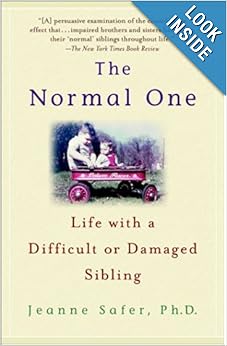
The Normal One. Library Regret #1
I would love to have a psychologist named Dr. Safer. How comforting. In The Normal One, Jeanne Safer writers about Caliban Syndrome, a set of emotional challenges that normal children face. The damaged sibling may have dealt with a disease, a disability, or some other difficulty, maybe even death. The normal child with Caliban Syndrome may experience premature maturity, survivor guilt, compulsion to achieve, or fear of contagion.  We don’t know if the person who took the book off the shelf had Caliban Syndrome, or if he or she was the difficult or damaged sibling. I quite enjoy my sister, but she doesn’t want me to mention her very much on this blog because she is somewhat famous.

Gotta love that sweater and those shoes. Image from the Huffington Post

Library Regret Number Two: The World According to Mister Rogers, Important Things to Remember, by Mister Fred Rogers, the star of the show Mr. Rogers’ Neighbourhood. My brother-in-law was reading this on a trip in Prince Edward Island. He was an English major and all set to become a teacher when he grew up until he got somewhat famous singing for children about bananas, apples and hippopotamuses. Like my sister, he probably doesn’t want me to talk too much about him on this blog either, but I’m sure he owes at least some of his success to Mister Rogers’ inspiration. 

The World According to Mister Rogers

Library Regret Number Three: You Can Heal Your Life, the in-colour, illustrated version by Louise Haye.

You Can Heal Your Life. Remember, "I Love Myself," "All is Well," etc.

I read this book while I was trying to heal my toenail fungus. Louise Haye is a nice older woman who claims that through very positive affirmations, she has rid her body of a whole slew of horrific cancers. According to Louise, all diseases stem from deep-rooted emotional and negative thinking patterns that manifest themselves in the body. For instance, canker cores come from “festering wounds held back by the lips.” Fungus is from stagnant beliefs and an inability to move forward. You Can Heal Your Life, your canker sores and your fungus by repeating positive affirmations to yourself as much as possible. Louise also takes delight in tapping her body while she’s repeating affirmations. Once the Boatman and I came a video of her tapping herself and talking to her angel
We thought it was very interesting. I’ll let you look up her videos for yourself. But facetiousness aside, she seems rather sweet and sincere. Eighty-six years old. 
For people who are concerned about the acetabular impingement in their hip joint, Louise has an excellent affirmation:
"Hip Hip Hurray. There is joy in every day. I am balanced and free."
Many of Louise’s affirmations involve the phrases “I deeply love and approve of myself” and “all is well.” My mother vigorously tapped affirmations into her head, temples, and shoulders during the years after her divorce. She used to say, “Even though my marriage failed, I deeply love and approve of myself. All is well.” It was very convincing.
Bless Louise Haye.
Time For Library Regret Number Four: Stop Running From Love: Three Steps to Overcoming Emotional Distancing and Fear of Intimacy by Dusty J. Miller. 
People who are afraid of intimacy are called “Emotional Distancers.” The three steps to overcoming this seem relatively simple. However, I don’t think I’m much of a distancer. I am more the clingy, needy type, so I didn’t read much more.
Library Regret Number Five: Indigo Adults: Understanding Who You Are and What you can Become by Kabig Jaffe and Ritane Davidson. 
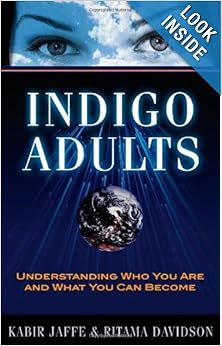
 On the back cover are the words, “Are you an Indigo Adult and don’t know it?” I wasn’t sure so I continued reading. The symptoms of being an Indigo Adult are
-unusual sensitivities,
-feelings of being separate or misunderstood
-frustrations and dissatisfactions with the “normal world.”
-a driving need to contribute to creating a better world
-a powerful longing for something more.
Sounds a little bit like Gifted Child Syndrome. Inside the book I skimmed over something about a planetary initiation on December 12, 2012. That’s over now. I did 108 sun salutations and nothing happened. Also, apparently everyone is stuck in a rigid Piscean Personality. This isn’t supposed to be good for very many chakras. The Indigo Personality reflects the new, fluid and flexible personality. This is supposed to be way better for way more chakras. Whatever the case, I couldn’t bear to read it. I will never understand who I am or what I can become.
I left all the rejected books in a pile on the table where I found them. Then I looked up another book by Dr. Jeanne Safer, the psychologist who wrote about the normal and damaged siblings. It is called "Beyond Motherhood: Choosing a Life Without Children."
I have begun to devour it with fervour.
I deeply love and approve of myself.
The End.
Exuberant Bodhisattva on Facebook
Twitter: @mypelvicfloor
I Let Go, self-help book by Erica J. Schmidt


What the fuck should I do with my life, Part Two.
Guillaume, Part Two.
Rumplestiltskin


Saturday, 7 December 2013

Compost Girl

How I became the Compost Girl

On Friday afternoon, I took on an act of environmental heroism. One of my bosses was going straight out of town that evening so she didn’t have time to dump the compost at home.  My other boss was overburdened with her own small child, along with a big pile of recycling and laundry bags full of the children’s nap sheets and the dirty rags we use to wipe up their mess and the Lysol. My two remaining co-workers who both have cars didn’t think twice when my bosses said that this week’s compost would go into the trash. But not I.

“I’ll take it home,” I immediately volunteered.

“On the bus?” said my laundry and child-burdened boss.
“Why not?” I asked.

“You’ll get kicked off,” said Co-Worker One with Car.
“No, I won’t. Metro Transit owes me big time.” I explained that I carry around a carefully documented list of all the days that Metro Transit has made me wait excessively in horrible Halifax weather, and the three and a half times they made me late despite my unfailing punctuality at the bus stop. When I die, I will bill Metro Transit for the time and misery they cost me and all the money will go to vegetarian party sandwiches at my funeral. Metro Transit dare not say anything about the compost.

“The other passengers might give you dirty looks though,” said Co-worker Two with car.

“They deserve it for massacring my ears with the hideous music blasting out of their headphones,” I replied smugly.

“Well, that’s very noble of you,” said Co-worker One with Car, smirking.
“Yah, you’re like a superhero,” said Co-worker Two.

“Compost Girl,” said Co-worker One.

Both co-workers with cars started laughing until tears formed in their eyes.

“I don’t see what’s so funny,” I said. “I’m just taking one for the environment. I’m an environmentalist.”
“Can you please write a blogpost about this, Compost Girl?” said Co-worker One. “I mean, if you had a blog."

Co-worker One is the only one who occasionally reads my blog. My bosses don’t know about it because my blog is so edgy and controversial that it would definitely get me fired. Add the Adventures of Compost Girl to the existing heaps of menstruation, vibrators and potty training theories and this blog will only get edgier.
I poured the mountains of decomposing napkins, lasagna, Moroccan bean soup, mediocre hummus and whole grain crackers into triple layered Sobey’s bags. There were three bags in all. I lugged the bags down the hill to my bus stop on the Bedford Highway. The bus was nearly empty, but a construction worker and Muslim couple were sitting at the back where I sat down. Nobody looked up when I sat down and as the ripening odours wafted through the back of the bus, the couple continued their faint dialogue and the construction worker kept flipping through his Metro newspaper. The bus driver let me off at the corner of Robie and University Avenue.  I trudged the two kilometres home in Halifax’s standard un-Christmasy foggy drizzle. As I walked, the plastic bag handles dug into my palms and left red creases. After I dumped the compost into the green bin in our driveway, I smelled my hands. They smelled like vomit, but it was nothing a little biodegradable dish soap couldn’t handle. 

The End. 

Notes from 2016: I feel like I did this a second time. On the bus ride home, I'd somehow switched my phone into accessibility mode. I fumbled frantically to try to get Siri to stop yattering away at me. My bus stop came and Siri was still relentlessly dictating all my options which was extremely discombobulating. After I got off the bus, I decided to go the the Rogers store on the corner of Spring Garden Road to see if they could fix it. It wasn't until I'd gotten the customer service people to adjust my settings and finally silence Siri when I realized I'd completely forgotten about the two bags of compost. I must have left them on the floor of the bus. That day marked my last attempts at environmental heroism.
 

Worms. Source

Exuberant Bodhisattva on Facebook
Twitter: @mypelvicfloor
I Let Go, self-help book by Erica J. Schmidt


Three Easy Strategies for Feeling Smug and On Top of Life
Business Ideas. On a Tuesday.
Cardboard Box


Saturday, 16 November 2013

Andrew Kaufman Reads from Born Weird: The Exuberant Bodhisattva attends another literary event

For a change from the usual sex and body parts, here is my second consecutive blog about a Halifax literary event. This time I went to the Spring Garden Road library where all the pigeons of Halifax congregate for pizza crusts and rejected hotdogs. On Tuesday night, the library also hosted author Andrew Kaufman who read from his new novel Born Weird.


This is Andrew Kaufman, and the cover of Born Weird (Photo From Here. And you can watch him read an excerpt)

Born Weird has a yellow cover. Inside it tells the story of the Weird family, named this way due to a mishap at Pier 21. The family consists of five quirky siblings who find themselves on a quest to reunite at their Grandmother Weird’s deathbed. There, if they arrive on time, Grandmother Weird promises to undo the blursings she cast on her grandchildren. A blursing, if you were wondering, is

a blessing + a curse.

Usually it is something that started as a blessing and eventually turned into a curse. Just like when you fall in love with someone because she rescues broken-winged ducks and abandoned pet turtles from the park, and that ends up being the reason you break up.

Blursing.
Now you know.

Anyways, from what I’ve heard and read so far, Born Weird is as playful and zany as the word blursing. Already I’ve been to Vancouver, Winnipeg, a cardboard city somewhere in Ontario, Montréal and the Kingdom of Upliffta, where Abba, one of the sisters is Queen.
At the Spring Garden Library, one of the cool people in the audience asked Andrew why so much of his work centres on a road trip? Andrew said quite simply that it provided a good narrative structure and he loves structure. He loves quests. Quests go back to his favourite superheroes from his favourite comic books. Actually, what he meant to say was that quests go back to his fondness for classics. The Odyssey, The Divine Comedy. Etc. Andrew added that road trips make the quintessential Canadian experience. Everyone from Halifax know this. Everyone in the audience had been on a big road trip. We had all been on road trips, and they'd changed us forever


This is Eliot, the Big Black Dog, having a bath before his Christmas road trip to Ontario. 
The Road Trip was one of the big highlights of his life. It changed him forever.
The next intelligent question from the audience was whether or not Born Weird evolved from something shorter like All My Friends Are Superheroes and some of Andrew’s other work. Apparently, Born Weird was the first book Andrew wrote all in one go, as a single, longer piece. Andrew said that he is more comfortable writing around 17 000 to 20 000 words, which is more the length of a novella rather than a novel. In Born Weird, he got around this by giving the Weird family lots of siblings.
And the third thing we learned was that in the nineties, Andrew used to tell stories out loud. Spoken Word. Stephanie Domet, author of Homing (a novel that involves pigeons and Spring Garden Road), and Fallsy Downsies (about a folk musician on a road trip) asked Andrew if he missed that. Andrew said no, and not only because Spoken Word is not quite as cool as it was in the nineties. Besides Spoken Word, Andrew also gave up filmmaking. He feels like making books leaves you with the most satisfying and enduring product. Ten years later, a spoken word performance is long forgotten whereas in ten years, a novel lives on, moldy in someone’s basement.
It seems as though Andrew Kaufman is somewhat self-deprecating. Perhaps that’s his blursing. Or a clessing, a curse that ends up being a blessing. I think it’s part of his charm.
If you live in Halifax, I recommend buying Born Weird at The Bookmark, on Spring Garden Road. Andrew Kaufman signed my copy and I vow to keep it far away from my moldy basement. Can’t wait to read the rest.
The End.
Nothing weird about this girl.

Follow Andrew Kaufman on Twitter: @severalmoments
Exuberant Bodhisattva on Facebook
Twitter: @mypelvicfloor
I Let Go, self-help book by Erica J. Schmidt


The Exuberant Bodhisattva attends Bookcamp Halifax 2013
Five Days of Creative Recovery
Asking Matt Wiviott About His Life


Sunday, 10 November 2013

The Exuberant Bodhisattva attends BookCamp Halifax 2013

 
This Saturday, I attended BookCamp Halifax 2013 at the Khyber Centre for the Arts. BookCamp Halifax is a so-called “un-conference” where all the strange and lovely book people in Halifax gather together to discuss book issues such as publishing, marketing, and of course, writing. The event was free and open to all kinds of book people of all calibres.

I started the morning with “Putting the 'Media' in Social Media." I had a vague inclination to live tweet the entire un-conference. Then former Chatelaine editor-in-chief Kim Pittaway reminded us that on Twitter, she doesn’t so much notice your absence as your irritable presence. Over the course of the day, my Twitter fans were privy to a few ingenious comments about a free macaroon, the colourful and delightful Khyber bathrooms, blue underwear and dinosaur porn, but that was about it. From the workshop, I gathered that social media is certainly helpful, however, it can quickly become a huge distraction and time suck. The most important thing about being a writer is how much you write, not how many Twitter followers you have. At the social media session, an audience member suggested brand new tweeters to follow the 2-2-2 rule: two tweets, two retweets, and two replies per day. This is supposed to help you accumulate followers over time.

(To retweet or to reply to my innovative and brilliant tweets, find me on @mypelvicfloor)

My next chosen session was “How to Make Headlines: Writing for Magazines and Newspapers.” The panelists were Halifax Magazine editor Trevor J. Adams, freelance writer Chris Benjamin, The Coast arts editor Stephanie Johns and fashion magazine publisher Amanda Kincaid.  I’ve always been a fan of Chris Benjamin’s writing in The Coast. When talking about freelancing, he said that when he first started, he was attached to a bunch of big ideas that he wanted to write about and change the world. Over time, he found he had to learn to hold these ideas a little less tightly and focus on the story that needed to be told, and the people. I thought that this was good advice. We also got advice from Trevor and Stephanie about writing pitches. Trevor gave the simple model of 3 paragraphs. One about why he should care, one about sources, and one about visual possibilities, something I’ve never really thought about. Overall, I found the session quite useful. Maybe someday I’ll write a pitch.

After lunch I went to Steven Laffoley’s session about Creative Non-fiction. I thought the presenter looked extremely familiar before realizing that he was the English teacher who stands in the Halifax Grammar School parking lot every day greeting students and parents. I walk by him every day on the way to the bus. My boyfriend Robbie, the Boatman, used to be his student. He said he was a wonderful teacher. And he runs like a madman. Apparently Stephen Laffoley also babysat Robbie when Robbie was seven. Wish I’d been around for that.

Mr. Laffoley, as the Boatman calls him, has written six books. His most recent one about boxer George Dixon. He sees creative non-fiction as a cinematic exercise of framing facts in the way that tells the best story, and turns the facts into timeless literature. He also said that writing is like coughing up a lung, which I appreciated. I guess creative non-fiction is selling pretty well these days, especially historical fiction in Nova Scotia where people are interested in their history and there are so many interesting stories from the past. Sounds like a good cure for pelvic obsessions and self-absorption. I may consider this.

The next session was How to Write a Novel in 30 Days, by Stephanie Domet, who hosts the CBC radio show Mainstreet and Atlantic Airways. The horrendous idea of composing a novel in 30 days comes from National Novel Writing Month, better known as NaNoWriMo, a worldwide network of writers who take a pact to write a 50 000 word novel during the 30 days of November. Stephanie hilariously and charmingly described how she haphazardly signed herself up for the trauma so she could report about it on the CBC radio show Definitely Not the Opera.  The month was a disaster of total procrastination. By Day 15, she had some vague ideas about a character who couldn’t leave the house, and a ghost at the Spring Garden Road Library. Over dinner, her friend joked that she might as well add pigeons to the mix. So she did. But by November 27, she had less than 20 000 words down. That meant more than 10 000 words per day. Still, she did not use her time wisely, and on the last day, ended up writing 20 000 words. Writing a novel in 30 days is about quantity, and not quality. People who have succeeded in the past say that it helps to have an outline of your characters wants, fears, the worst things that could happen to them, and how you could orchestrate that happening to them. You can follow this advice, or as Stephanie seems to have done, just write like hell. In either case, in the end you get a draft that you can surgically repair into something beautiful. Stephanie got a published book out of her 30-day novel Homing. And now she knows that if the shit ever again hits the fan, she is capable of writing 20 000 words in a day. But this is to be avoided.

I considered doing the 30-day novel month this year, but I thought that it would turn into an overly ambitious New Year’s Resolution. I suppose that there are still 20 days left…  That’s 2500 words a day. We’ll see.  When I started I Let Go, I vowed that it would be published on Amazon within three days. Most of it was done in three weeks. Not terrible, however, most people can read the entire thing in about 45 minutes. Oh well.

The final session of the day was where I learned about Dinosaur Porn.  In a fragmented skyped presentation, Sean Cranbury spoke about how the internet and digital media has opened up all sorts of possibilities in publication.  Putting publication in the hands of the creator has allowed for the unlikely rise of Dinosaur Erotica on Amazon.  After learning about self-publishing on Amazon, college students Alara Branwen and Christie Sims have taken it upon themselves to grace the literary world with tales of dinosaur boning and prehistoric lust.

I was immediately compelled to do further research on this. In a Huffington Post Interview between author Alaran Branwen and reporter Hilary Hansen, Branwen postulates that dinosaur erotica appeals to our more base, carnal natures. Some people also probably like the idea of a big, powerful, massive male roughly having sex with a smaller female. It’s like the ultimate sexual experience with an alpha male, which is something that we are all inherently wired to enjoy.”


At Halifax BookCamp, I unfortunately didn’t get to discuss this alpha dinosaur sex experience with any of the participants, but this is my only complaint about the event.  Otherwise, I had thoroughly satisfying day, filled with tips and inspiration that stemmed far beyond sex with pterodactyls.

Many, many thanks to the speakers, volunteers, and organizers.

The End.
After you're done with the T-Rex:


Tuesday, 29 October 2013

How I Am Old

28 years ago today, I was cut out of my mother’s stomach. I was headed out the vagina feet first, which isn’t usually recommended.  Legend has it that my father turned white as a ghost. My mother said that after she knew I was okay, she thought that she might die, but that it would be okay because I was already born. 


Mother, Sister, Me. All of us born.

I heard of a pregnant lady who’s getting a planned c-section this Thursday, on Halloween. A Halloween Caesarean. I feel like if it were my caesarean, I’d pick another day.
 
Today, I am overwhelmed with Facebook, text, and other digital birthday love. Even Google seems to know that it’s my birthday. There are colourful cupcakes and cakes on the homepage. Thank you Google, but thank you more to all the other real people I’ve met in real life and who remembered me.

On the bus this morning, I decided I would make a clichéd list about things that make me old.
1.  A small bunion is growing on the inside of my left foot. Despite years of diligently spreading my toes barefoot or wearing devastatingly practical shoes. Also, I think spider veins on my legs are in my near future. So be it. My short shorts aren’t going anywhere.


Long Live the Kino Shorts


2. I like to go to bed at 9 P.M. Even better is to go to bed at 8 P.M. and read library books until I fall asleep. Conversations after 9 P.M. exhaust me. Parties are the worst. No part of my body can make peace with why I am upright, awake and speaking.  My bedtime is geriatric.

3. I hate the people on the bus who blast horrible music through their headphones with the arrogant assumption that I might like to hear their lyrics word for word. One afternoon I asked some dude on the 80 if he might like to mute the video game music that was massacring my ears.  He looked at me with enormous disdain and called me a stupid fucking c-word. So now, on the bus, I say nothing. I sit, sighing, glaring and shaking my head like a seething eighty-year-old woman.
And that’s it. Otherwise, I am not very old. I look back on words and photographs from every year of my life, and even from last week, and I think, what a baby, you’re so young. As though the person looking back is so wise and aged. A week later, a year later it will be the same thing. Me looking at me, so young. 


Me, taking action, getting action, 27 years old.


Me nasal-flossing in Miami, 26 years old.

Me and my sister at the Halifax Harbour. 26 years old. Very sophisticated.

Me, 16, reading Amelia Bedelia at summer camp.

Me, Darby and Joanne, singing Kirtan, the first year I started Mysore, 22 years old.

    
Rocking the houla hoop, and tie-dye, on Mary Street in Perth, Ontario, 7 years old.

Exuberant Bodhisattva on Facebook
Twitter: @mypelvicfloor
I Let Go, self-help book by Erica J. Schmidt


What the fuck should I do with my life? Part One
What the fuck should I do with my life? Part Two
Happy


Sunday, 27 October 2013

What People Really Need

The mug Jadwiga made me was blue on the inside, white on the outside, and covered with strange creatures. A mixture of  humans, cats, and bunny rabbits, the creatures had long oval faces, dots for eyes, a round nose, crescent shaped lips, and eyebrows. Human half-circle ears at the sides and pointy ears at the tops. Behind the heads were large, half-circle bodies, supported with tiny hoofs and concluded with a round tail. Between the creatures, Jadwiga (pronounced Yad-Vee-Ga) had painted small flowers with yellow centres and five or six red petals. For my birthday, my boss Nathalie had ordered the cup from the L’Arche workshop where Jadwiga worked. It was supposed to be from my entire L’Arche house of people with intellectual disabilities. On the bottom, Jadwiga wrote, “To Erica, from Jadwiga.” Jadwiga loved to write her name on everything she created. And if anything had her name on it, she hated to throw it out. In the mail, she’d receive membership offers from credit card and insurance companies.
 

To Erica, From Jadwiga

“Well it is for me,” she would say. “Jad-wi-ga, it says. Jad-wi-ga Lukasik.  That’s me, Er-i-ca.” Often she’d take the scissors and cut her name out of the envelope, storing it amongst piles of paper in her desk. Every morning for breakfast, Jadwiga ate a small bowl of Cornflakes with milk, a piece of toast and jam, a glass of orange juice and instant decaf coffee poured into a mug. Always she used the same dishes. A bowl that would hold only the permitted amount of Cornflakes, (our restrictions, not hers), a small spoon to measure the jam and eat the cereal with, a small white plate, a short juice glass, and her special mug.
 
“That is my cup,” she’d say. “With a cat on it. The cat was black and on the white cup was patterned floral designs and calligraphied letters. Regularly, Jadwiga would sound out the words.
 
“What. People. Rea-lly. Need. Well what it says, Erica?”
“You can read it,” I’d tell her.
“What Peo-ple Rea-lly Need. Is. A Good. Listening to.  Okay. That’s very interesting.”  She’d look at the cup for a moment. “Well, Erica, one day, it will be gone. Broken. My cup. With the cat on it.” Every time she heard something shatter in the kitchen, she’d say. “Well, it is my cup, proba-blee. With the cat on it.” When she discovered it wasn’t her cup, she’d say, “Well, one day, it will be my cup. Gone. Broken.”
One day, Jadwiga’s cup did shatter. I think someone dropped it as they were drying the dishes.
“I knew it,” Jadwiga said. “It was my cup. Gone. Broken.”
I lived with Jadwiga for two years in the L’Arche community, from when I was 19 until I was nearly twenty-two. Now I am almost twenty-eight and I live in Halifax with my boyfriend.
The other morning as I was getting ready for work, I’d left my empty coffee cup with Jadwiga’s strange creatures on it on the ledge at the top of the banister. As I reached for it before heading downstairs, I knocked it over and it shattered, the strange creatures’ amputated limbs and divided bodies spread all over the upstairs hallway. My cup. Broken. The one thing that Jadwiga had made for me. She likely won’t make me anything else. She is old now and can’t remember who I am. I should never have been so careless, leaving the cup so precariously at the top of the staircase. Then again, even if the cup had been spared that morning, another morning, it would have been gone, broken.
All the broken pieces
On September 20, I called Jadwiga to wish her a happy 74th birthday. She is used to receiving phone calls from her sister Lucy and she began to speak to me in Polish.
“It’s Erica,” I said.
“Oh, Erica,” she said, confused. “Well, Erica, you will prepare yourself and supper, and eat it alone. I tried to explain that I wasn’t alone. I was in Halifax. I had a boyfriend, and at that time, a dog.
“Well, I’m not feeling very good,” Jadwiga said. “But it’s okay. You too, proba-blee. Not feeling very good.”
“Oh, I’m okay,” I said. “Sorry, you’re not feeling well.”
“Well, Erica, thank you for your call. I won’t keep you. You will prepare yourself a supper and eat it alone.”
“That’s okay, Jadwiga. I’m not in a hurry.”
“I said I won’t keep you. Goodnight.” And she hung up.
When you have a cup, the Buddhists says that you should see it as already broken. Because soon it will be. And then you won’t be disappointed.
The cup is broken. The bus is broken. The relationship is broken. This body, this life. My body, my life. Gone.
I put the broken pieces of my cup in a plastic bag in the basement. I never bothered rinsing off the coffee residue.
Now I am taking a picture of the broken pieces. After that, I will throw them in the garbage, and then they will be gone. 
Jadwiga's Strange Broken Creatures:


The Image on Jadwiga's Broken Cup with the Cat:

What People Really Need Is A Good Listening To.

Exuberant Bodhisattva on Facebook
Twitter: @mypelvicfloor
I Let Go, self-help book by Erica J. Schmidt 


My Life's Purpose
A Broken Body is Not a Broken Spirit
Not Separate From All That Is


Tuesday, 1 October 2013

Obituary: Eliot, the Big Black Dog

Robbie and I are heartbroken to announce that Eliot, our Big Black Dog, died on Friday, September 27. Eliot was the very first underdog of the Underdog Club, a Montreal-based dog adoption program that finds homes for hard-to-place shelter dogs. The handsome young man was placed into the loving and dedicated hands of Underdog Club founder Fern Breslaw and Robbie Cameron, also known as “The Boatman.”


Eliot, the Very First Underdog (Photo: Jamie Leblanc)


Eliot even got to be in an art show on. (Photo Jamie Leblanc, Design Fern Breslaw)

Soon after his adoption, Fern brought Eliot along to work with her at Cossette, one of Canada’s top ad agencies. Cossette employees have fond and vivid memories of Eliot’s charm, exquisite good looks, and the time he got diarrhea all over the carpets of the production office. As a Cossette employee put it, “we all get the shits. Good for Eliot for reminding us of our humanity.” Over the years, Eliot would regularly provide his caregivers with such reminders. Cleaning up Eliot’s myriad excretions was known to relieve back pain, creative blocks, and financial angst.

Following his stint at Cossette, Eliot returned home to accompany his pitbull boxer brother and fellow underdog Charlie through his emotional struggles. With both dogs and humans, Eliot always played a bit hard to get, but Charlie loved him dearly and the two were good friends.


Charlie and Eliot, fellow underdogs

In 2009, Robbie and Eliot moved to Halifax, where Eliot was embraced by the Cameron family, who bought him a luxurious bed, invited him to many parties, and treated him very well. Eliot used to love to raise hell in Point Pleasant Park. One morning, to his great delight, Eliot found and chased a raccoon into the woods. An extended period of screeching and unpleasant noises ensued. By the time Robbie could get to the scene, the raccoon had perished and Eliot stood in immense self-satisfaction, his tongue dragging down to the ground.

Horrified, Neighbour Malcom saw to it that Eliot was banned from the park. The Wildlife Protection Services said that he could return upon successful completion of obedience school.  Despite our attempts with a private trainer, we felt quite certain that Eliot could never be trusted with a raccoon or anything equally tempting. He never returned to the park; however, he continued to adore his walks during which he chased after sticks and barked at every dog he passed.
 

Throughout his life, Eliot was always excited to get to his “next thing.” He loved the transitions that would lead him to the subsequent item on the agenda. Getting into the car, and out of it. Arriving at the party, and then leaving. Walking up the stairs to go to bed. Although he was not a particularly affectionate dog, he seemed to take comfort in the predictability of his routines. And he always seemed to like having us around.
Last Christmas was a wonderful time for Eliot. He got to celebrate with the Camerons and open lots of presents. Then he got to go on a big long car trip to Ontario. Car rides were one of Eliot’s favourite activities. The trip to Ontario entailed thousands of stops and starts and exciting next things. Eliot probably had more fun than me and the Boatman combined.  

Eliot loved the trip to Ontario, except for the bath.

On the way home from Ontario, we stopped in Montreal so that Eliot could reunite with his dear friends Fern and Charlie. Due to Charlie’s emotional problems, the visit was not a big success. Charlie was inexplicably terrified of his old friend and Eliot had to stay in a kennel.  That said, we are happy that Eliot had a chance to return to his roots before his passing. Also, we are so grateful to Fern for starting the Underdog Club and adopting Eliot with Robbie so that he could enjoy his great life.

For Eliot, the ageing process was difficult, but thankfully quite brief. Plagued with arthritis and fragile hips, his legs gave out one by one. Over the past month or so, we treated the pain with various pills and remedies. Just a couple weeks ago, we took him to the beloved cottage one last time.  Sadly, not long after, it became clear that Eliot’s pain and discomfort were too severe to manage and that his life, once full of joy and excitement was now miserable. In respect for this majestic young man, we made the heartwrenching decision to put him down.

Eliot enjoyed one last car ride to the vet’s. We had to carry him out of the house. On his way into the trunk, he tried to leap out of our arms. He looked excitedly out the window for a few moments before lying down. At the vet’s, he lay down again and we pet him and said goodbye. As the vet opened her needles, Eliot perked up, always interested in a package or present. It took the vet a long time to find Eliot’s vein. While she was looking, Eliot got calmer and calmer. Right before she found it, we could hear the vet’s front door open and another dog walked into the vet’s office.  Eliot lifted his head, let out a final soft “woof,” and he put his head down.

We miss him so much.

Thanks to everyone who loved him.